The Sep/Oct issue of Poets & Writers has a curious article by poet and professor John Poch ("Pimp My Writing") in which he compares the workshop he teaches to an episode of MTV's Pimp My Ride. This is awkward, to say the least, though it does yield some interesting, statistically improbable phrases, such as "Did Ezra Pound pimp T.S. Eliot's ride when he helped him with one of the greatest poems of the last century, 'The Waste Land'?"
I don't mind odd comparisons, but in exploring the challenges of a creative writing workshop, Poch manages to find fault in everyone but himself, from the kids on Pimp My Ride ("You know he's going to chop the car up into pieces and sell the parts on eBay. If he doesn't, the stuff's just going to get stolen or smashed by his jealous friends. The kid is probably pretty lazy. Just look at the car he'd been driving.") to Americans in general ("Americans want it easy. We want to win the lottery. We want somebody to pimp our rides for us.") to his students in particular ("What's the solution when a teacher has to confront unimaginative minds?").
I've never met any of Poch's students so I can't confirm whether they're as dim as he thinks. As for Americans, sure many of us want it easy, but so does most of the rest of humanity. And I think it goes without saying that laziness is not the only reason that the kids featured on Pimp My Ride drive busted up cars.
What I can say is that Poch consistently contrasts his own virtues against everybody else's vices. "All I did during the semester was pimp their rides," he says of his students' poems. "And I'm pretty good at it.... I'm like the sound technician who has been working with woofers and tweeters for years.... I can trick out your poem. Shoot, I can even stick some neon lights under the poem's chassis if I put my mind to it." When he remarks on his own faults, it's mostly to show how he has grown past them and become a better person as a result.
In the end, the conclusion Poch comes to isn't a bad one: "Creative writing teachers who want to best teach the art must strike a balance. The teacher must weigh offering suggestions with remaining silent, general discussion with exposure to the masters," he writes. Sure, sounds great. But the best creative writing teachers are also those who don't go into the workshop assuming that all of their students are a bunch of lazy, entitled, unimaginative morons.
Showing posts with label MFA Programs. Show all posts
Showing posts with label MFA Programs. Show all posts
Wednesday, September 05, 2007


Wednesday, July 18, 2007
David Yezzi: MFAs "only almost completely worthless"
My colleague and alert AWY reader Adele spotted this gem in a MensNewsDaily.com interview with poet David Yezzi:
"It’s not that masters degrees in poetry, which function as excellent cash cows for universities across the country, are completely worthless. I have one myself, and I can say that they are only almost completely worthless. They do have one serious downside however: students seeking preferment begin to write like their teachers. They then graduate with a degree that is really only useful to teach creative writing in a program much like the one from which they have just graduated. Their students learn to write like they do and so on. This has had quite a deadening effect on contemporary poetry in general, I think."Granted, Yezzi is the Executive Director of The New Criterion, a bastion of dour conservatism in the literary world, so it is fair to assume that he is a grumpy man to begin with. He and his colleagues liked things better the way they were before, when people wore bow ties (like co-editor Roger Kimbrall) and wrote poems that rhymed, goddammit. Still, it's one more voice of dissent against the prevailing model of creative development. He may not be completely right, but he's not completely wrong either.
Thursday, May 31, 2007
(Almost) An Argument Against MFAs
In New York Magazine, Australian-born novelist Peter Carey has a smart and humane article on coming of age as a writer by way of MFA programs: "A New York Writer's Catch-22." (Thanks to my colleague Adele for drawing my attention to this one.) It includes a pithy description of one of the major issues MFA students face -- the cost of their education and the unlikelihood that they will be able to recoup those costs through their work:
If the chances of emerging as the next great author are so slim, why not suggest that they do as he did, and go someplace far off, and work, and write? Maybe that's just a silly and naive proposition. Then again, he is part of the MFA system now, so maybe the "extraordinary gifts that student debt can confer" have gotten to him more than he thinks.
"And here is what seems most insane—young and not-so-young writers take out student loans to get M.F.A.’s in creative writing. This does not add up. I once taught in the M.F.A. program at Columbia, and so I know the extraordinary gifts that student debt can confer. But the Marshian in me says it’s impossible to start a life committed to literary fiction when you are $60,000 in debt. The very size of the loan assumes there is a market, a business to go into, a living to make. But the hard truth is that only a sucker writes literature with the intention of making money. This was so obvious in Australia in 1961, you never needed to say it. Today, when people seem to be breaking through all around you, it might be good to bear in mind that the only reward you can rely on is in the work itself. And, of course, they do know that. A while ago, I went down to Strand with my then 13-year-old son and we were, of course, selling books and we watched the buyer separating the sheep from the goats, without understanding which was which. When the judgment was made, he pushed back at us a pile of really good novels. These, it turned out, were the goats. I said, “But surely you can sell Rohinton Mistry.” And he said, “We don’t need fiction.” And I thought, Where am I?
And I thought, quoting Beckett to myself, Imagination Dead Imagine.
But those twelve students sitting round the table have to forget way bigger things than money. In particular, they must forget that they’re walking out onto the same field as Proust, Joyce, Woolf, Conrad, Austen. This should be enough to stop anyone. Of course, it never has been."
Surprisingly, despite a lengthy discussion of his own development as a writer in Australia, outside of the MFA system ("There was just one literary agency in Australia in 1962, but I didn’t know what a literary agent was," he recalls. "As for an M.F.A. in creative writing, I’d never heard of such a thing. Denied these distractions, all I could do was write."), Carey does not follow this argument to its logical conclusion, that maybe his students could become equally talented writers without the expense of the MFA.
If the chances of emerging as the next great author are so slim, why not suggest that they do as he did, and go someplace far off, and work, and write? Maybe that's just a silly and naive proposition. Then again, he is part of the MFA system now, so maybe the "extraordinary gifts that student debt can confer" have gotten to him more than he thinks.
Friday, January 05, 2007
Another Skirmish in the Poetry Wars
 Speaking of MFA programs, John Barr of the Poetry Foundation certainly has knotted some knickers with his essay "American Poetry in the New Century," which appeared in the September 2006 issue of Poetry. In it, he argues that, "American poetry is ready for something new because our poets have been writing in the same way for a long time now," and though he is careful to say that, "the malaise that lies over poetry today has no single cause," he does call out MFA programs for their part in creating "a climate of careerism." As an alternative, he urges poets to "live broadly, then write boldly."
Not surprisingly, all manner of apologists emerged, rhetoric-ablazing. In the November issue, the reaction ranges from disgusted disbelief (et tu, Poetry?) to self-righteous scorn (Poetry as entertainment? Preposterous! Sacrilege!). From Stephen Yenser to Sidney Wade, they lay it on thick.
Now, I don't agree with all of Barr's ideas, but I'm disturbed by the mocking, absolutist response. It seems to me that the surest sign that an art (or a business, a field of study, a country) is in trouble is when its leaders cannot entertain conflicting ideas or philosophies. At the same time, I agree with several of the angry-letter writers that, judging from the many essays and general hand-wringing that takes place over it, American poetry is perpetually on the brink. Of course there is exaggeration and short-sightedness in such claims, and we are within our rights to roll our eyes at them.
But is it so impossible even to admit, like honest addicts, that we have a problem? That even some of the blame for the public's lack of interest in contemporary poetry lies with its practitioners? That academe, as the chief builder and supporter of poets today, is at least somewhat responsible? Poetry is the province of uncertainty, exploration and question. Why then do so many purport to know the answer so surely?
In her response to Barr's essay, Sidney Wade of the Association of Writers and Writing Programs declares, with the assurance of someone who sleeps well at night, that, "public neglect for poetry is not the fault of MFA programs." I suspect, however, that she, like Barr, is only partially correct. In my opinion, MFA programs and universities are at least partly to blame because they have created a kind of echo chamber for poetry that is written, reviewed, studied, published and promoted by people who share a highly sophisticated understanding of the art. No, they're not all writing the same thing, the same kind of poetry, or exclusively for one another, but they do share a similar, university-influenced perspective. It's hardly unreasonable to suggest, as Barr does, that poets who reflect a diversity of backgrounds, experiences and occupations would be healthier for the art form.
American culture has indeed changed, and changed in a way that discourages quiet, time-intensive pleasures such as reading poetry. But poetry, too, has changed. Much of it has moved away from the wide avenues of human experience and into the attics and machine rooms of language. So much of poetry today seems the product of hobbyists -- elusive, intricate, fixated on minutae. Some of this is great art, and expands the limits of poetry as we have known it. More of it is drivel. This is not to say that demanding, forward-looking poetry should not be written, taught, supported or appreciated -- only that we should be aware that there is a cost to our indulgences. In this case, that cost may be a non-specialist reader's patience (or respect).
The challenge for poets writing today is not to dumb down their work, but to be mindful that a core purpose of poetry is the communication of ideas, emotion and experience. Making poetry appealing to a broader audience doesn't entail using smaller words, but embracing bigger issues. It also requires some acknowledgement of the truth in Barr's assertion that, "Poetry... must meet a standard of pleasure as well as profundity if it is to recover its place in American culture." That line reminds me of an exchange about jazz and black culture between Bleek Gilliam (Denzel Washington) and Shadow Henderson (Wesley Snipes) in Spike Lee's Mo' Better Blues:
- Bleek: ".... It incenses me that our own people don't realize our own heritage, our own culture, this is our music, man."
- Shadow Henderson: "That's bullshit."
- Bleek: "Why?"
- Shadow Henderson: "...Everything, everything you just said is bullshit.... That's right, the people don't come because you grandiose motherfuckers don't play shit that they like. If you played the shit that they like, then people would come, simple as that."
Thursday, January 04, 2007
Why Not an MFA?
The way I see it, MFA programs have a few important things to offer. Mainly, these are:
As I thought more about what I really wanted, it gradually became clear that these benefits were outweighed by other factors and concerns, including the following:
- Structured time
- Motivation
- Community
- Mentorship
- A degree
As I thought more about what I really wanted, it gradually became clear that these benefits were outweighed by other factors and concerns, including the following:
- Overall, I'm a little suspicious about how large a role academia currently plays in literature. I believe part of the writer's role is to question and comment on the established ideas and institutions of his or her time, and I think that's difficult to do from an institutionalized context (however benevolent that institution may be). Moreover, I'm interested in writing that appeals to a wide spectrum of readers, and I worry that many MFA programs unintentionally promote a type of writing that is accessible only to a specialist audience.
- If I were to do an MFA program, I would want to enroll in a good one and study with someone I really respect. For me, that would necessitate leaving Chicago (an expensive and hugely disruptive proposition, at this point) or doing a low-residency program like Warren Wilson's... but if I did a low residency program, many of the major pluses of an MFA program (face-to-face workshops, interaction with like-minded colleagues, etc.) would be effectively negated.
- Low-residency or not, most MFA programs are expensive. Except for a handful with particularly storied programs, most universities like MFAs primarily because they are cash cows.
- I'm uncertain about the actual value of an MFA degree; I now have several friends who have completed MFAs, but (as far as I can tell) the degree hasn't gotten them much further along than they already were. I think they would all say they loved the experience and that it shaped them in important ways, but I would question whether they couldn't have achieved similar results by pursuing writing on their own, outside of the program structure.
- I don't feel compelled to teach writing at the college level, at this point. I could imagine doing a full-time MFA program only to emerge from it looking for exactly the same type of job I currently have (which uses my writing skills, pays reasonably well, and allows me to work from home).
- Although the MFA has emerged as a kind of credential for writers, that obviously wasn't always the case. To learn about writing, you read a lot of books. If you wanted to write a book, you went out and wrote one. If you were lucky you had another writer or two to correspond with about it. Of the writers I admire most, very few have MFAs.
- I've already published a couple of poems and seem to be doing all right on my own, in terms of improving my fundamental skills. More than anything else, the chief obstacle to pushing my writing further is having enough time to dedicate to it.
Sunday, October 29, 2006
Considering an MFA?
I'm not doing an MFA program. Why I made that decision is a topic for another post, but I don't know that it was the right one and I don't think I will know until sometime next year, if ever. For now, I go merrily along down my own path.
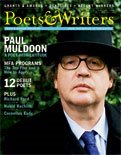 However, if you're thinking about trying out for the MFA squad, it's worth picking up a copy of the current issue of Poets & Writers (Nov/Dec 2006), which features a section on MFA programs, including a piece written by my friend Nell Henderson on the top five in the country. For those keeping score, they are currently the University of Iowa (#1), Johns Hopkins and the University of Houston (tied for #2), and Columbia and the University of Virginia (tied for #3). My money's on UVA to take out Hopkins in the finals.
Nell is one of the smartest people I know, so it's no surprise that she brings some healthy skepticism to the task of comparing these programs to one another and to the central premise that creative writing programs can be objectively scored or ranked in the first place. I also appreciate her attention to one detail that is often, bewilderingly, brushed aside: the enormous costs of many of these programs, and to what extent these institutions are able to offset those costs.
Anyway, if you're considering applying for an MFA, check out Nell's article first. It'll give you a good sense of the top (ranked) programs and possibly get you thinking about some of the other issues and questions surrounding these programs as well.
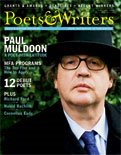 However, if you're thinking about trying out for the MFA squad, it's worth picking up a copy of the current issue of Poets & Writers (Nov/Dec 2006), which features a section on MFA programs, including a piece written by my friend Nell Henderson on the top five in the country. For those keeping score, they are currently the University of Iowa (#1), Johns Hopkins and the University of Houston (tied for #2), and Columbia and the University of Virginia (tied for #3). My money's on UVA to take out Hopkins in the finals.
Nell is one of the smartest people I know, so it's no surprise that she brings some healthy skepticism to the task of comparing these programs to one another and to the central premise that creative writing programs can be objectively scored or ranked in the first place. I also appreciate her attention to one detail that is often, bewilderingly, brushed aside: the enormous costs of many of these programs, and to what extent these institutions are able to offset those costs.
Anyway, if you're considering applying for an MFA, check out Nell's article first. It'll give you a good sense of the top (ranked) programs and possibly get you thinking about some of the other issues and questions surrounding these programs as well.
Subscribe to:
Posts (Atom)